Analog.Semiconductors.Tests.NMOSTest
Test circuit for NMOS: a resistively loaded common-source stage under a slow gate ramp.
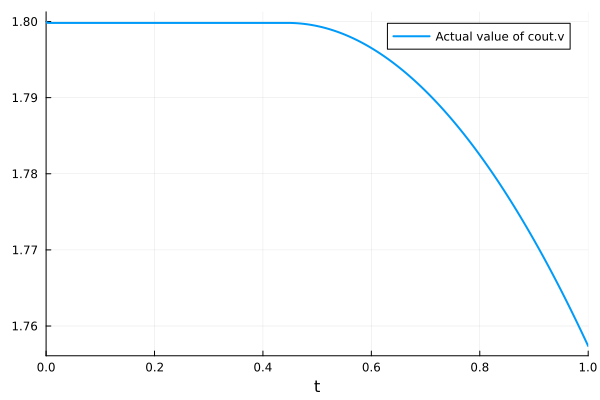
The gate sweeps 0 to 1.8 V over 1 s with the drain fed from a 1.8 V rail through 1 kOhm, so one run crosses all three regions of the square law. With the default MSL card Vt = 0.8, so the device is in cut-off below Vgate = 0.8 — carrying only the RDS shunt — then saturation, then triode once ugst exceeds uds.
The region seams are C0 but not C1, so m.d.i has visible kinks at them. m.ugst is the K5-scaled gate overdrive that selects the region, so recording it makes the seams legible.
The output capacitor supplies the one differential state; its 1 ms time constant is three decades faster than the ramp, so the curve is the DC characteristic.
Usage
ElectricalComponents.Analog.Semiconductors.Tests.NMOSTest()
Behavior
Source
"""
Test circuit for NMOS: a resistively loaded common-source stage under a slow gate ramp.

The gate sweeps 0 to 1.8 V over 1 s with the drain fed from a 1.8 V rail through 1 kOhm,
so one run crosses all three regions of the square law. With the default MSL card
`Vt = 0.8`, so the device is in cut-off below `Vgate = 0.8` — carrying only the `RDS`
shunt — then saturation, then triode once `ugst` exceeds `uds`.

The region seams are C0 but not C1, so `m.d.i` has visible kinks at them. `m.ugst` is
the `K5`-scaled gate overdrive that selects the region, so recording it makes the seams
legible.

The output capacitor supplies the one differential state; its 1 ms time constant is
three decades faster than the ramp, so the curve is the DC characteristic.
"""
test component NMOSTest
  "Supply rail level (1.8 V)"
  supply_lvl = BlockComponents.Sources.Constant(k = 1.8) {
    "Dyad": {"placement": {"diagram": {"x1": 20, "y1": 220, "x2": 120, "y2": 320}}}
  }
  "Supply rail"
  supply = ElectricalComponents.Analog.Sources.VoltageSource() {
    "Dyad": {"placement": {"diagram": {"x1": 155, "y1": 345, "x2": 255, "y2": 445}}}
  }
  "Gate ramp: 0 to 1.8 V over 1 s"
  gate_sig = BlockComponents.Sources.Ramp(height = 1.8, duration = 1) {
    "Dyad": {"placement": {"diagram": {"x1": 150, "y1": 120, "x2": 250, "y2": 220}}}
  }
  "Gate drive"
  gate = ElectricalComponents.Analog.Sources.VoltageSource() {
    "Dyad": {"placement": {"diagram": {"x1": 285, "y1": 245, "x2": 385, "y2": 345}}}
  }
  "Drain load resistor (1 kΩ)"
  rd = ElectricalComponents.Analog.Basic.Resistor(R = 1000) {
    "Dyad": {"placement": {"diagram": {"x1": 285, "y1": 20, "x2": 385, "y2": 120}}}
  }
  "MOSFET under test"
  m = ElectricalComponents.Analog.Semiconductors.NMOS() {
    "Dyad": {"placement": {"diagram": {"x1": 415, "y1": 130, "x2": 515, "y2": 230}}}
  }
  "Output node capacitance (1 µF); supplies the differential state"
  cout = ElectricalComponents.Analog.Basic.Capacitor(C = 1u) {
    "Dyad": {"placement": {"diagram": {"x1": 555, "y1": 20, "x2": 655, "y2": 120}}}
  }
  "Ground reference"
  ground = ElectricalComponents.Analog.Basic.Ground() {
    "Dyad": {"placement": {"diagram": {"x1": 420, "y1": 350, "x2": 520, "y2": 450}}}
  }
relations
  "Gate starts at 0, so the device is off and the output sits at the rail"
  initial cout.v = 1.8
  connect(supply_lvl.y, supply.V) {"Dyad": {"edges": [{"S": 1, "M": [{"x": 205, "y": 270}], "E": 2}], "path": {}}}
  connect(gate_sig.y, gate.V) {"Dyad": {"edges": [{"S": 1, "M": [{"x": 335, "y": 170}], "E": 2}], "path": {}}}
  connect(supply.p, rd.p) {
    "Dyad": {
      "edges": [{"S": 1, "M": [{"x": 140, "y": 395}, {"x": 140, "y": 70}], "E": 2}],
      "path": {}
    }
  }
  connect(rd.n, m.d, cout.p) {
    "Dyad": {
      "edges": [
        {"S": 1, "M": [], "E": -1},
        {"S": -1, "M": [], "E": 2},
        {"S": -1, "M": [], "E": 3}
      ],
      "junctions": [{"x": 465, "y": 70}],
      "path": {}
    }
  }
  connect(gate.p, m.g) {
    "Dyad": {
      "edges": [{"S": 1, "M": [{"x": 270, "y": 295}, {"x": 270, "y": 180}], "E": 2}],
      "path": {}
    }
  }
  connect(m.s, m.b, cout.n, supply.n, gate.n, ground.g) {
    "Dyad": {
      "edges": [
        {
          "S": 1,
          "M": [{"x": 465, "y": 245}, {"x": 530, "y": 245}, {"x": 530, "y": 180}],
          "E": 2
        },
        {"S": 2, "M": [], "E": -1},
        {"S": -1, "M": [{"x": 670, "y": 70}], "E": 3},
        {"S": -1, "M": [{"x": 670, "y": 500}, {"x": 270, "y": 500}], "E": -2},
        {"S": -2, "M": [], "E": 4},
        {"S": -2, "M": [{"x": 400, "y": 395}], "E": -3},
        {"S": -3, "M": [], "E": 5},
        {"S": -3, "M": [{"x": 470, "y": 295}], "E": 6}
      ],
      "junctions": [{"x": 670, "y": 180}, {"x": 270, "y": 395}, {"x": 400, "y": 295}],
      "path": {}
    }
  }
metadata {
  "Dyad": {
    "tests": {"case1": {"stop": 1, "expect": {"signals": ["m.d.i", "m.ugst", "cout.v"]}}}
  }
}
end
Flattened Source
"""
Test circuit for NMOS: a resistively loaded common-source stage under a slow gate ramp.

The gate sweeps 0 to 1.8 V over 1 s with the drain fed from a 1.8 V rail through 1 kOhm,
so one run crosses all three regions of the square law. With the default MSL card
`Vt = 0.8`, so the device is in cut-off below `Vgate = 0.8` — carrying only the `RDS`
shunt — then saturation, then triode once `ugst` exceeds `uds`.

The region seams are C0 but not C1, so `m.d.i` has visible kinks at them. `m.ugst` is
the `K5`-scaled gate overdrive that selects the region, so recording it makes the seams
legible.

The output capacitor supplies the one differential state; its 1 ms time constant is
three decades faster than the ramp, so the curve is the DC characteristic.
"""
test component NMOSTest
  "Supply rail level (1.8 V)"
  supply_lvl = BlockComponents.Sources.Constant(k = 1.8) {
    "Dyad": {"placement": {"diagram": {"x1": 20, "y1": 220, "x2": 120, "y2": 320}}}
  }
  "Supply rail"
  supply = ElectricalComponents.Analog.Sources.VoltageSource() {
    "Dyad": {"placement": {"diagram": {"x1": 155, "y1": 345, "x2": 255, "y2": 445}}}
  }
  "Gate ramp: 0 to 1.8 V over 1 s"
  gate_sig = BlockComponents.Sources.Ramp(height = 1.8, duration = 1) {
    "Dyad": {"placement": {"diagram": {"x1": 150, "y1": 120, "x2": 250, "y2": 220}}}
  }
  "Gate drive"
  gate = ElectricalComponents.Analog.Sources.VoltageSource() {
    "Dyad": {"placement": {"diagram": {"x1": 285, "y1": 245, "x2": 385, "y2": 345}}}
  }
  "Drain load resistor (1 kΩ)"
  rd = ElectricalComponents.Analog.Basic.Resistor(R = 1000) {
    "Dyad": {"placement": {"diagram": {"x1": 285, "y1": 20, "x2": 385, "y2": 120}}}
  }
  "MOSFET under test"
  m = ElectricalComponents.Analog.Semiconductors.NMOS() {
    "Dyad": {"placement": {"diagram": {"x1": 415, "y1": 130, "x2": 515, "y2": 230}}}
  }
  "Output node capacitance (1 µF); supplies the differential state"
  cout = ElectricalComponents.Analog.Basic.Capacitor(C = 1u) {
    "Dyad": {"placement": {"diagram": {"x1": 555, "y1": 20, "x2": 655, "y2": 120}}}
  }
  "Ground reference"
  ground = ElectricalComponents.Analog.Basic.Ground() {
    "Dyad": {"placement": {"diagram": {"x1": 420, "y1": 350, "x2": 520, "y2": 450}}}
  }
relations
  "Gate starts at 0, so the device is off and the output sits at the rail"
  initial cout.v = 1.8
  connect(supply_lvl.y, supply.V) {"Dyad": {"edges": [{"S": 1, "M": [{"x": 205, "y": 270}], "E": 2}], "path": {}}}
  connect(gate_sig.y, gate.V) {"Dyad": {"edges": [{"S": 1, "M": [{"x": 335, "y": 170}], "E": 2}], "path": {}}}
  connect(supply.p, rd.p) {
    "Dyad": {
      "edges": [{"S": 1, "M": [{"x": 140, "y": 395}, {"x": 140, "y": 70}], "E": 2}],
      "path": {}
    }
  }
  connect(rd.n, m.d, cout.p) {
    "Dyad": {
      "edges": [
        {"S": 1, "M": [], "E": -1},
        {"S": -1, "M": [], "E": 2},
        {"S": -1, "M": [], "E": 3}
      ],
      "junctions": [{"x": 465, "y": 70}],
      "path": {}
    }
  }
  connect(gate.p, m.g) {
    "Dyad": {
      "edges": [{"S": 1, "M": [{"x": 270, "y": 295}, {"x": 270, "y": 180}], "E": 2}],
      "path": {}
    }
  }
  connect(m.s, m.b, cout.n, supply.n, gate.n, ground.g) {
    "Dyad": {
      "edges": [
        {
          "S": 1,
          "M": [{"x": 465, "y": 245}, {"x": 530, "y": 245}, {"x": 530, "y": 180}],
          "E": 2
        },
        {"S": 2, "M": [], "E": -1},
        {"S": -1, "M": [{"x": 670, "y": 70}], "E": 3},
        {"S": -1, "M": [{"x": 670, "y": 500}, {"x": 270, "y": 500}], "E": -2},
        {"S": -2, "M": [], "E": 4},
        {"S": -2, "M": [{"x": 400, "y": 395}], "E": -3},
        {"S": -3, "M": [], "E": 5},
        {"S": -3, "M": [{"x": 470, "y": 295}], "E": 6}
      ],
      "junctions": [{"x": 670, "y": 180}, {"x": 270, "y": 395}, {"x": 400, "y": 295}],
      "path": {}
    }
  }
metadata {
  "Dyad": {
    "tests": {"case1": {"stop": 1, "expect": {"signals": ["m.d.i", "m.ugst", "cout.v"]}}}
  }
}
end
Test Cases
Test Case case1
plt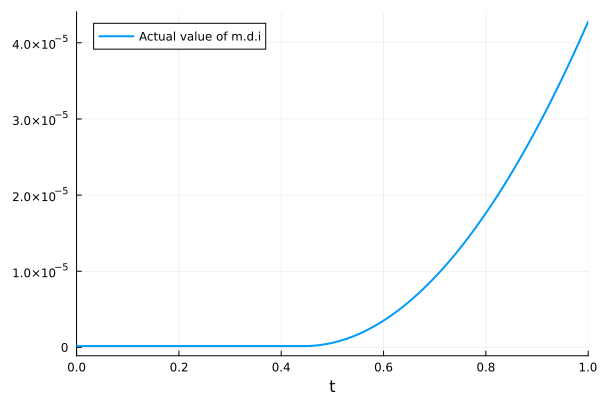
plt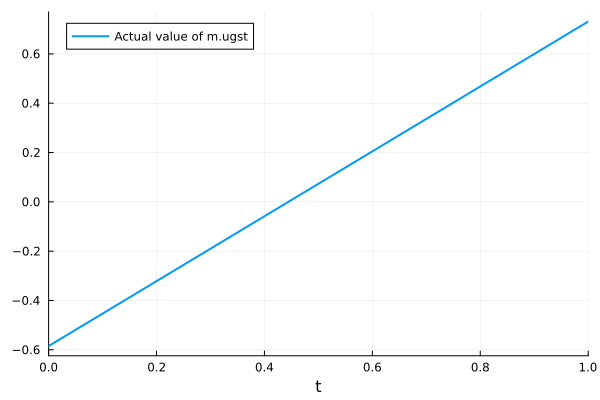
plt